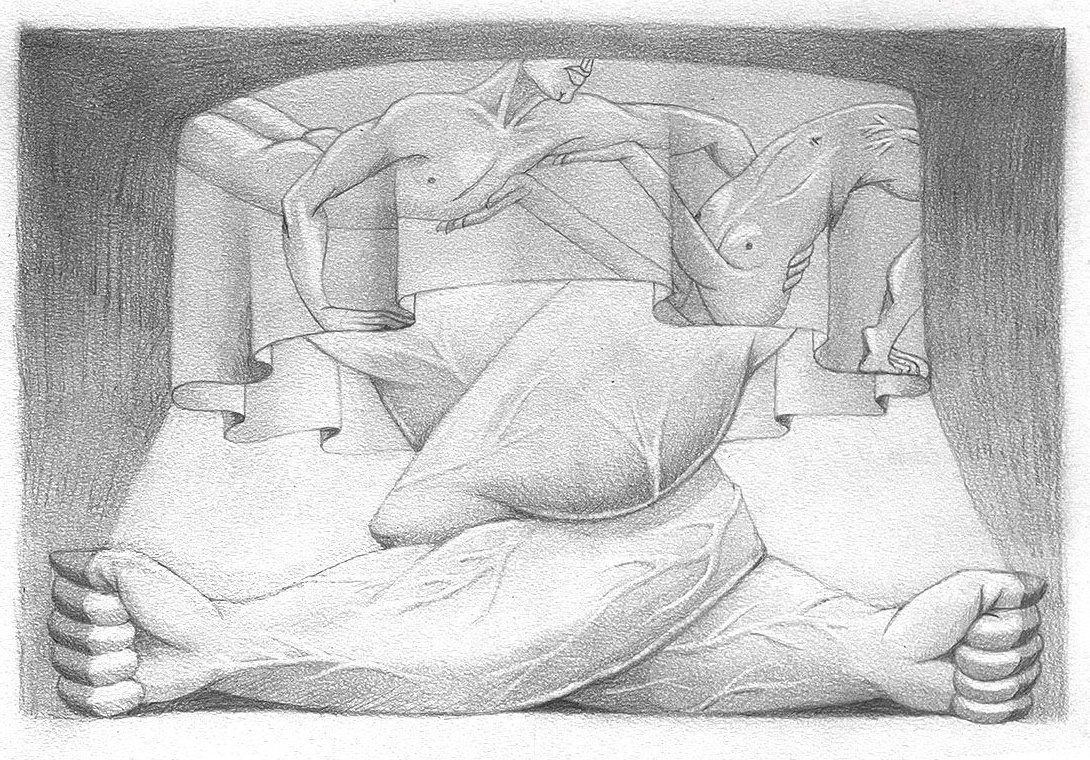
“The hidden light is found everywhere, and only the veil conceals it.”
Rabbi Baruch of Mezhbizh, Hasidic and Kabbalistic teaching
In Light and Veil, the figures in Cutler’s pencil drawings are themselves the lamps. Each figure has a structure, a light, and a lampshade, where a scene takes form: a story, a habit, or a psychological pattern accumulated over the course of life.
Cutler draws on the Kabbalistic idea that the body serves as a vessel through which the soul shines. This idea comes with a responsibility and a tension: we attempt to maintain the vessel and care for it, so the light can keep expanding.
She looks closely at what accumulates on the shade. Shame, for instance: what happens when it stains the lampshade? How do the stories we tell ourselves and life experiences warp the light that we emit? Alongside it, desire, seduction, and a touch of humor: how can they be celebrated with balance and respect?
Cutler conveys a sense of joy, movement, and curiosity toward these subjects, opening a window for looking inward: Is our light shining? Dimming? And above all, what makes our light grow?